Watercolor Foliage Assets for Creative Projects
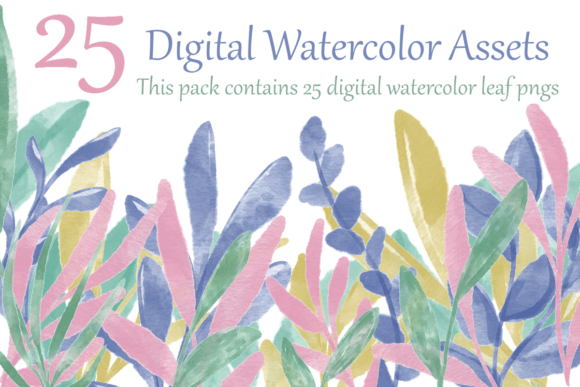
If you have spent any time looking for design resources, you have likely come across the term Watercolor Foliage Assets. At its simplest, this refers to a collection of digital plant and leaf illustrations created in the watercolor style. These assets are not physical paintings—they are high-resolution digital files that mimic the soft, flowing look of real watercolor on paper. Think of them as ready-to-use botanical artwork that you can drop into any project without needing to paint a single leaf yourself.
For many creators, these assets solve a common problem: how to add natural, organic beauty to digital work without years of artistic training. The appeal lies in their versatility. A single set might contain dozens of leaves, branches, ferns, and floral elements, each with subtle color variations and transparent backgrounds. This makes them immediately useful for anyone who wants that hand-painted look without the mess or time commitment.
What Makes Watercolor Foliage Assets So Useful
The main purpose of these assets is to give you a shortcut to beautiful, nature-inspired visuals. Instead of hiring an illustrator or spending hours learning watercolor techniques, you can simply download a pack and start designing. The characteristics that make them valuable include:
- Transparency and layering – Most files come in PNG format with no background, so you can place them over any color or texture.
- Varied opacity – The paint-like quality means edges are often soft, and colors blend naturally, giving depth to flat designs.
- Botanical variety – Packs typically include multiple types of leaves, vines, and flowers, offering flexibility for different themes.
- Scalability – Because they are high-resolution, you can use them for small social media graphics or large printed posters without losing quality.
For beginners, these assets remove the intimidation of starting from scratch. You do not need to know how to draw or paint. You just need a basic image editor—free tools like Canva or GIMP work fine—and you can begin arranging elements right away. For professionals, the value lies in speed. A graphic designer working on a wedding invitation can assemble a lush botanical border in minutes rather than building each leaf from scratch.
Where People Use These Assets in Real Life
The range of use cases for Watercolor Foliage Assets is broader than you might expect. They are not just for card makers and scrapbookers. Here are some realistic examples across different contexts:
Digital Content and Social Media
Bloggers and social media managers often need fresh visuals to keep feeds interesting. A food blogger, for instance, might place a soft watercolor leaf behind a recipe photo to create a warm, natural frame. An Instagram influencer promoting wellness products could use these elements as subtle overlays, giving posts a cohesive, botanical theme without overwhelming the main subject. The key is that these assets add texture and elegance without looking overly polished or corporate.
Print Design and Branding
Small business owners frequently turn to these assets for packaging, labels, and business cards. Imagine a small soap maker who wants a handmade feel for their product labels. Watercolor foliage provides that gentle, artisanal look that customers associate with natural ingredients. Similarly, a wedding planner might use branch and leaf motifs on save-the-date cards, menus, or thank-you notes. The soft paint quality helps the design feel romantic and organic rather than stiff.
Educational and Workshop Materials
Teachers and educators training in design or art can use watercolor foliage to demonstrate composition, color theory, or digital layering. Because the assets already have a painterly quality, students can focus on arrangement and balance rather than worrying about creating realistic textures from scratch. This makes the learning process faster and more rewarding.
Home Decor and Printables
For hobbyists who enjoy creating their own wall art, these assets are a goldmine. With a simple editing tool, you can arrange leaves and vines into a custom botanical print, add a quote, and print it at home or through a local shop. The result looks like an original watercolor painting, but the work took a fraction of the time. Many people use this approach to decorate nurseries, home offices, or living rooms with personalized, nature-inspired pieces.
What to Consider Before Choosing a Pack
Not all Watercolor Foliage Assets are created equal, and choosing the wrong set can lead to frustration. Here are practical factors to evaluate before you make a purchase or download:
- Resolution and file type – Look for at least 300 DPI if you plan to print. For web use, 72 DPI is usually enough, but higher resolution gives you flexibility.
- Color palette – Some packs offer a limited range of greens and muted tones, while others include bright, saturated colors. Consider what matches your brand or project style.
- Licensing terms – This is crucial. Some packs are for personal use only. If you are a freelancer or small business owner, make sure the license covers commercial projects like packaging, logos, or products for sale.
- File organization – A well-organized pack with named files and folders saves enormous time. You do not want to hunt through hundreds of unnamed images.
- Format support – Most packs come in PNG with transparent backgrounds. Some also include SVG or EPS files for vector editing. Check that the format works with your software.
How to Get Started Right Now
If you are new to using these assets, the fastest way to begin is to find a free or budget-friendly starter pack. Many designers offer small sample sets so you can test the quality before investing in a larger collection. Once you have your files, open them in any program that supports layers. Drag a few leaves onto a blank canvas and experiment with positioning, rotation, and opacity. You will quickly see how combining different elements can create a complete scene.
One useful technique is to group similar tones together. If you are designing a calming nature-themed graphic, stick with greens, blues, and soft yellows. For a vibrant, tropical feel, mix in brighter pinks and oranges. Because the assets already have that watercolor blend, they will harmonize well even if you arrange them loosely.
Why These Assets Appeal to So Many Different People
The reason Watercolor Foliage Assets have become so widely used is simple: they bridge the gap between handmade art and digital convenience. A beginner can create something that looks like it took hours of skilled work. A professional can speed up their workflow without sacrificing quality. An entrepreneur can give their brand an authentic, approachable feel without breaking the budget on custom illustration.
There is also a certain emotional appeal to botanical watercolor. It feels gentle, organic, and human. In a world of sharp vector icons and sterile stock photos, these assets bring warmth. Whether you are designing for a client, your own business, or a personal hobby, that human touch can make a real difference in how your work is perceived.
Ultimately, watercolor foliage assets are a tool. Like any tool, their value depends on how you use them. With a little creativity and attention to quality, they can elevate almost any project—from a simple greeting card to a full brand identity. The best approach is to start small, experiment freely, and let the natural beauty of the paint do most of the work for you.