The Art of Pastel Watercolor Digital Paper: Where Tradition Meets Digital Design
The Unique Appeal of Pastel Watercolor Textures
There is something inherently calming about the soft blending of pastel hues and the fluidity of watercolor washes. When these two artistic elements combine, they produce a visual language that speaks to both nostalgia and modernity. Pastel watercolor digital paper captures this delicate interplay, offering creators a versatile surface that evokes the tactile quality of real paper while existing entirely in the digital realm. Unlike standard digital backgrounds, which can appear flat or overly uniform, high-quality digital papers mimic the subtle grain, uneven saturation, and organic edges of traditional watercolor and pastel mediums. This authenticity allows designers, educators, and hobbyists to infuse projects with a handcrafted feel without the mess, cost, or time constraints of physical art supplies.
From a psychological perspective, pastel tones are often associated with tranquility, creativity, and softness. When rendered as watercolor textures, these colors gain depth and movement. Digital paper producers have refined their techniques to replicate the way pigment settles into paper fibers or the way pastel chalk leaves a powdery residue. The result is a surface that feels alive, inviting the viewer to touch or linger. For professionals who need to convey elegance, gentleness, or artistry, pastel watercolor digital paper becomes a strategic choice rather than a mere decorative afterthought.
How Digital Paper Captures the Essence of Watercolor and Pastel
The technical process behind creating convincing pastel watercolor digital paper involves layering scanned textures, adjusting transparency, and applying algorithms that simulate paint dispersion. Many digital paper sets are produced by scanning real watercolor paintings at high resolution, then isolating the color washes and paper grain. Others are generated procedurally, using noise functions and brush emulations to recreate the unpredictable spread of water on paper. The pastel element is often added through soft, blended overlays that mimic the dusty, matte finish of dry pastel strokes. When these methods converge, the digital paper gains a paradoxical quality: it looks both deliberate and serendipitous, exactly like its physical counterpart.
- Color bleeding and edge softening: True watercolor paint diffuses along paper fibers, creating fuzzy edges. Digital reproductions use blur algorithms and mask layers to achieve this effect.
- Granulation and texture: Pigment particles cluster unevenly in real watercolor. High-end digital papers incorporate grain maps that vary the opacity and hue across the surface.
- Pastel layering: Pastel’s characteristic chalky build-up is simulated through multiple semi-transparent layers that interact with the watercolor base, producing a rich, tactile appearance.
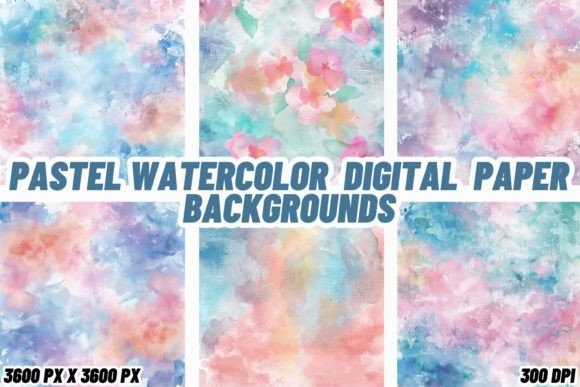
For example, a set of pastel watercolor digital paper might include a base of pale pink wash with subtle grain, overlaid by a soft violet pastel haze in the corners. When used as a background for typography or illustrations, such a paper adds a sense of atmosphere that a solid color or simple gradient cannot achieve.
Graphic Design and Branding
Designers regularly turn to pastel watercolor digital paper for packaging, social media graphics, and website backgrounds. A cosmetics brand aiming for a gentle, organic identity might use a mint green watercolor paper as the backdrop for product shots. Wedding invitation suites often feature blush or lavender digital papers with subtle watercolor blooms. The key advantage is versatility: the same digital paper can be resized, recolored, or combined without losing its organic feel. Because the paper exists as a digital file, it can be layered with text, icons, or photographs while preserving visual depth.
Digital Art and Illustration
Illustrators use pastel watercolor digital paper as the starting canvas for digital paintings. Instead of a blank white screen, they begin with a textured, tinted surface that influences color choices and brush behavior. Many drawing applications allow artists to set a background layer with blending modes, so strokes interact with the paper’s texture. This workflow mirrors traditional techniques where the paper’s color and grain affect the final piece. An artist might choose a warm peach watercolor paper to give portraits a natural skin glow, or a cool blue pastel paper for winter landscapes.
Stationery and Print-on-Demand
Small business owners and hobbyists create printable planners, journals, and cards using pastel watercolor digital paper collections. A printable planner spread might feature a pale yellow watercolor background with a subtle pastel grid overlay, offering structure without harsh lines. Print-on-demand platforms allow customers to upload designs that incorporate these digital papers, resulting in products like notebooks, art prints, and gift wrap. The digital nature means no inventory of physical paper is needed, and colors can be adjusted for different printers.
Education and Pedagogy
Teachers and educators use pastel watercolor digital paper to create visually engaging worksheets, presentation slides, and classroom decorations. The soft backgrounds reduce visual noise and help students focus on content. For subjects like art history or color theory, a digital paper that mimics watercolor techniques can serve as a tangible example of the medium. Online course creators often design slides with pastel watercolor borders to establish a warm, approachable aesthetic that encourages learning.
Choosing the Right Pastel Watercolor Digital Paper for Your Project
Not all digital papers are created equal. When selecting pastel watercolor digital paper, consider resolution, color palette, and licensing. High-resolution files (300 dpi or higher) are essential for print projects to avoid pixelation. For web use, smaller file sizes with optimized compression maintain load speed while preserving quality. Color accuracy matters: some digital papers are sRGB for screen, others Adobe RGB for print. Always check if the paper includes a seamless tile pattern or if it is a single large canvas, as this affects how it can be repeated or expanded.
- Evaluate the texture strength: Some digital papers have heavy grain that works beautifully for artistic projects but may interfere with readability for text-heavy layouts.
- Look for layered files: Advanced designers appreciate files with separate layers for the watercolor wash and pastel overlay, allowing customization of opacity and blend modes.
- Consider the color harmony: Pastel sets often come in coordinated palettes (e.g., blush, mint, lavender, butter). Choose a set that complements your brand or project theme.
- Check commercial use terms: If you intend to sell products using the digital paper, ensure the license allows for commercial use without additional royalties.
A common mistake is assuming all pastel watercolor digital paper behaves the same. A paper designed for scrapbooking may have a glossy overlay that looks artificial when used in a digital painting. Conversely, a highly textured paper meant for fine art reproduction might overwhelm a simple flyer. Testing a sample in your target application—whether it is Photoshop, Procreate, or a web builder—saves time and prevents disappointment.
Technical Considerations for Digital Artists and Designers
Working with pastel watercolor digital paper requires understanding a few technical nuances. File formats like PNG with transparency allow the paper to be placed over other backgrounds, while JPEG is suitable for opaque uses. The color profile should match the output medium: sRGB for screens, CMYK for print. If the digital paper has a strong texture, it may increase file size, so balancing quality with performance is crucial for web projects. Some digital papers include a subtle noise layer that simulates paper tooth; this can cause banding if compressed too aggressively.
Another consideration is how the paper interacts with digital brushes. In applications like Clip Studio Paint or Photoshop, blending modes such as Multiply or Overlay can make the paper texture appear through painted strokes, creating a unified look. Artists might use the digital paper as a layer locked at normal opacity and paint on separate layers, or they can set the paper as a base and apply filters to adjust its color and texture. For example, a pastel watercolor digital paper with a low opacity layer of white noise can soften digital lines, giving a drawing a more organic finish reminiscent of sketchbook work.
The Role of Pastel Watercolor Digital Paper in Education and Collaboration
In remote learning environments, pastel watercolor digital paper has found a niche as a tool for visual aids and collaborative boards. Teachers can share digital paper backgrounds on platforms like Google Jamboard or Miro, allowing students to write or draw on top while the soothing pastel tones reduce eye strain. Art instructors use these papers as reference for color theory exercises: students can sample colors from the digital paper and learn how watercolor and pastel hues combine. The digital format also enables instant feedback and iteration, which is harder to achieve with physical materials.
Collaborative design teams benefit from using a shared library of pastel watercolor digital paper assets. When everyone works on the same pastel palette, visual consistency across presentations, documents, and prototypes improves. For nonprofits and educational institutions, the cost-effectiveness of digital papers—often sold as inexpensive bundles or free downloads—makes them accessible without compromising aesthetic quality. Additionally, because the papers are reusable, they support sustainable design practices by reducing the need for physical paper production.
Trends and Future Directions in Digital Art Surfaces
The demand for realistic digital surfaces continues to grow as technology blurs the line between physical and virtual creation. Pastel watercolor digital paper is part of a larger movement toward “hyper-real textures” that allow digital artists to work in a way that feels natural. Emerging tools like generative AI can now create custom digital papers based on text prompts, enabling designers to generate a unique pastel watercolor texture with specific color harmonies or grain patterns. This development expands creative possibilities while raising questions about originality and licensing.
Another trend is the integration of digital paper into augmented reality (AR) applications. Imagine viewing a pastel watercolor digital paper through a phone camera and having it appear as physical stationery on a desk. Such applications are already being explored by interior design platforms and educational AR tools. As virtual and augmented reality become more commonplace, the need for high-fidelity textures like those found in pastel watercolor digital paper will increase. Artists and designers who familiarize themselves with these digital assets now will be well-positioned to leverage them in future immersive projects.
Moreover, the maker community continues to drive innovation. Independent creators on platforms like Etsy and Creative Market produce thousands of new pastel watercolor digital paper sets each year, each with a distinct artistic voice. This ecosystem encourages experimentation, from neon pastel watercolors that glow under black light to textured papers that mimic handmade washi. The result is a rich, ever-evolving library that serves everyone from the casual scrapbooker to the professional branding agency.
Ultimately, pastel watercolor digital paper is more than a file—it is a bridge between the tactile joy of traditional art and the efficiency of digital workflows. Whether you are designing a wedding suite, teaching a lesson on color mixing, or simply looking for a calming background for your next presentation, these digital papers offer a simple yet profound way to elevate visual communication. By understanding their characteristics, applications, and technical requirements, you can harness their full potential and create work that feels both timeless and contemporary.