Shadyspeed Script Font for Bold Branding
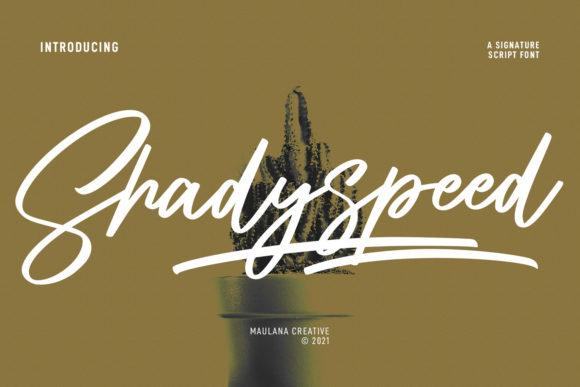
Some typefaces whisper. Others announce themselves with confidence, personality, and a bit of swagger. Shadyspeed Script Font belongs firmly in the second camp. This signature-style script strikes a balance between polished professionalism and playful character, making it a versatile asset for anyone working with text—whether you're designing a logo, laying out a book title, or crafting social media visuals that need to stop the scroll.
At first glance, Shadyspeed reads like a handwritten signature from someone who takes pride in their penmanship. The strokes are regular and consistent, yet there's an energy that keeps it from feeling stiff. The letters connect naturally, and the inclusion of ligatures gives certain character pairs a fluid, almost bespoke feel. It's not trying to mimic messy handwriting. Instead, it offers a refined version of it—the kind of script you'd want on a storefront, a film poster, or a product package that needs to convey both approachability and quality.
What Makes Shadyspeed Stand Out Among Script Fonts
Script fonts are plentiful, but many fall into one of two traps: they're either too ornate to read easily or too plain to feel special. Shadyspeed avoids both extremes. The letterforms are fun without being childish, and the regular stroke weight ensures legibility even at smaller sizes. That's a rare combination in the world of modern typography.
One of the font's strongest features is its two file variants for lowercase alternates and swashes. This means you're not stuck with a single set of letters. You can mix and match to create custom wordmarks, adjust the rhythm of a headline, or add decorative flourishes where they make sense. For a designer working on logo design, this flexibility is invaluable. It allows you to tweak the visual hierarchy without switching typefaces or starting from scratch.
The swashes themselves are tasteful. They don't overwhelm the letterforms. Instead, they enhance the natural flow of the script, giving it a handcrafted feel that works beautifully in editorial design and packaging design. Whether you're building a brand identity from the ground up or refreshing an existing one, Shadyspeed offers enough stylistic range to keep your work feeling fresh and intentional.
Where Shadyspeed Shines in Real Projects
I've tested Shadyspeed across several contexts, and it performs particularly well in four areas: logo design, social media graphics, movie titles, and book titles. That doesn't mean it's limited to those uses, but these are where its personality really comes through.
For logo design, Shadyspeed works best when you want a signature aesthetic without the unpredictability of an actual handwritten scan. It's consistent. Every instance of a letter looks exactly the same, which is crucial for brand recognition. A coffee shop, a boutique stationery brand, or a creative consultancy could all use this font as the centerpiece of their visual mark. The alternates let you tailor the logo so it doesn't look like a template.
In social media graphics, attention spans are short. Shadyspeed's bold, confident strokes grab attention quickly. It pairs well with clean sans serif fonts for quotes, announcements, and promotional posts. The contrast between a script headline and a neutral body text creates a clear visual hierarchy that guides the viewer's eye exactly where you want it.
Movie titles and book titles benefit from the font's dramatic yet readable quality. It evokes a sense of story and craftsmanship. For a film title, especially in genres like drama, romance, or indie documentaries, Shadyspeed adds emotional weight. For book covers, it signals that the content inside has been carefully written—a subtle but powerful cue for potential readers.
Pairing Shadyspeed with Other Typefaces
No font exists in a vacuum. How Shadyspeed interacts with its typographic companions can make or break a design. Because it's a script font with strong personality, it works best as a display font—something you use for headlines, titles, and short-form emphasis rather than long body text.
For body copy, consider pairing it with a neutral sans serif font. A clean, minimalist typeface like Open Sans, Lato, or Montserrat provides breathing room. The sans serif handles readability while Shadyspeed handles personality. If you're going for a more vintage or editorial feel, a serif font with moderate contrast can also work well. The key is to let Shadyspeed lead and keep everything else supportive.
In web design, this pairing strategy is especially important. Headlines set in Shadyspeed draw the eye, but the body text needs to be easy to read across devices. A well-chosen sans serif font ensures that readability remains high without competing with the script's flair.
Practical Guidance for Choosing and Using Shadyspeed
Before you commit to any typeface for a project, it helps to evaluate a few practical factors. Here's a checklist I use when considering Shadyspeed Script Font:
- Project fit: Is the tone of your project friendly, creative, or premium? Shadyspeed leans toward approachable sophistication. It works for bold branding, but if your project requires extreme formality or minimalism, you might want something more restrained.
- Readability at scale: Test the font at the actual size it will appear. On a business card, large swashes might feel cramped. On a poster, they add drama. Use the alternate files to adjust the density of the script based on your output size.
- Licensing clarity: Always confirm the commercial font license before using Shadyspeed in client work, products, or any revenue-generating project. A proper commercial font license protects both you and your client.
- Color and background: Script fonts with regular strokes like Shadyspeed handle color well. They stand out on dark backgrounds and look crisp in white or metallic finishes. Test your color palette early to avoid surprises.
Another consideration: texture. Shadyspeed has a smooth, almost ink-like quality. It doesn't try to look distressed or grunge. If you're designing for a brand that values cleanliness and clarity, that's a strength. For a rugged or industrial brand, you might need to layer it with textures or pair it with a rougher secondary font.
The Role of Shadyspeed in Brand Identity
Consistency is the backbone of any strong brand identity. When you choose a typeface, you're making a statement about how the brand should be perceived. Shadyspeed contributes to brand recognition because it's distinctive without being divisive. People may not know typography terms like "alternates" or "ligatures," but they will notice that the text feels cohesive and intentional.
For entrepreneurs and small business owners, this font can elevate a brand that might otherwise look generic. A logo set in Shadyspeed immediately signals that care was taken in the design. It suggests the business values aesthetics as much as function. For marketers and content creators, using this font across social media templates, email headers, and promotional materials creates a unified visual language that builds trust over time.
The font also works well as a design asset in physical spaces. Think signage, menus, packaging tags, or event banners. Its regular stroke weight means it reproduces cleanly in print, and the swashes add a decorative touch that feels premium without being fussy.
Readability and Audience Engagement
Some designers worry that script fonts sacrifice readability for style. That concern is valid—many scripts are nearly impossible to read at small sizes or in long passages. Shadyspeed sidesteps this problem through its regular stroke and careful letter spacing. It stays legible in headlines and short blocks of text, which is exactly where a display font should operate.
Audience engagement often comes down to first impressions. A title or headline set in Shadyspeed invites curiosity. It looks human, like someone actually wrote it. In a digital landscape flooded with generic sans serif text, that human quality stands out. It encourages readers to pause, look closer, and absorb the message.
For bloggers and publishers, using Shadyspeed for section headers or pull quotes adds visual variety without disrupting the reading flow. It breaks up long passages of text and gives the layout a professional, curated feel. The key is restraint—use it as an accent, not the main voice.
Final Thoughts on Working with Shadyspeed
Shadyspeed Script Font occupies a sweet spot in modern typography. It's not trying to be the loudest font in the room, but it doesn't fade into the background either. It brings personality, consistency, and practical flexibility to projects across branding, publishing, marketing, and digital design.
If you're evaluating this typeface for your next project, focus on how it supports your message. A script font should enhance the tone, not distract from it. With its alternates, swashes, and clean stroke design, Shadyspeed gives you the tools to do exactly that. Whether you're designing a logo for a new venture, laying out a book cover, or building a social media presence, this font can help your work feel more intentional, more polished, and more human.