New Kids on the Font: A Playful Display Font for Creative Projects
Sometimes a typeface walks into your design arsenal and immediately feels like it belongs there. That’s the kind of energy New Kids on the Font brings to the table. This is not another generic sans serif or a restrained serif font that blends into the background. It’s a display font with a distinct personality—cute, colorful, and unapologetically playful. Whether you are designing for a classroom, launching a brand for young audiences, or putting together party invitations that actually spark joy, this typeface offers a refreshing alternative to the usual safe choices. It evokes the spontaneity of childhood while still giving you enough structure to work professionally. In a world where so much digital communication feels sterile, a font like this one reminds us that design can be warm, approachable, and genuinely fun without losing its purpose.
What Makes This Typeface Stand Out Visually
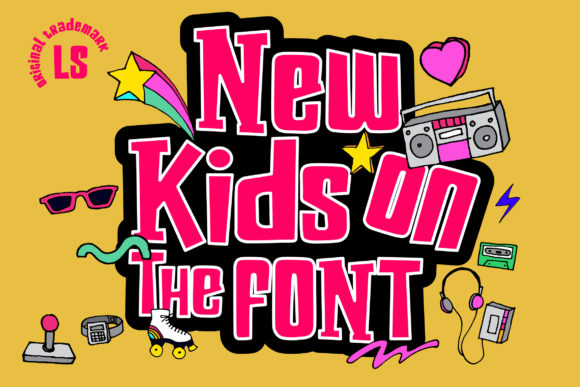
When you first look at New Kids on the Font, you notice its rounded edges, uneven stroke weights, and an overall sense of movement that feels hand-drawn rather than mechanically perfect. It reads as a handwritten font—but one that has been cleaned up just enough to remain legible across different sizes and media. The letterforms tilt slightly, giving the text a lively, dancing rhythm that immediately signals informality and creativity. This is not a font you would use for a corporate annual report, and that is precisely its strength. It embraces imperfection in a way that feels authentic, not sloppy. The color aspect is also worth noting: while the font itself comes in standard black and white outlines, its design naturally invites bright, saturated color treatments. The open shapes and generous spacing mean you can fill the letters with gradients, patterns, or even tiny illustrations without losing readability. For designers working on projects aimed at children or young families, this visual flexibility is a huge asset. You can pair it with solid backgrounds, texture overlays, or even let it stand alone as a bold statement piece on a poster or a social media graphic.
Where the Font Shines in Real Projects
I have tested New Kids on the Font across several project types, and its sweet spot is clearly in any context where a sense of wonder or approachability matters. Think about logo design for a daycare center, a children’s clothing boutique, or a family-friendly café. The font’s playful curves instantly communicate warmth and safety. In editorial design, it works beautifully for headlines in kids' magazines, activity books, or even in school newsletters where you want to grab attention without scaring off young readers. The same applies to packaging design—especially for products like organic snacks, toys, or educational kits. I have seen it used effectively on cereal box covers and craft supply labels, where the font helped create a cohesive brand personality that parents trust and kids love. In the digital space, this font performs surprisingly well in web design for playful brands, though I recommend reserving it for headings and call-to-action buttons rather than body text. On social media graphics, particularly for Instagram stories or Pinterest pins aimed at parenting or education niches, it adds a handcrafted feel that stands out in crowded feeds. Even for personal projects like birthday invitations, scrapbook titles, or holiday cards, this font brings a sense of occasion that a standard typeface cannot match. If you run a small business or a blog focused on family, lifestyle, or creativity, New Kids on the Font can become one of your go-to design assets for building a recognizable and beloved visual identity.
Influence on Readability and Visual Hierarchy
One concern people often have with highly expressive display fonts is readability. Can you actually read a sentence set in New Kids on the Font without squinting? The answer depends on how you use it. At larger sizes—say 36 points and above—the font remains clear and inviting. The generous x-height and open counters help each letter stay distinct, even when you apply effects like shadows or outlines. For shorter phrases, like a tagline or a product name, it reads effortlessly. The key is to use it as a headline or accent font, not for long paragraphs. This is where font pairing becomes your best friend. Pair it with a clean, neutral sans serif font (like Montserrat, Lato, or Open Sans) for body copy, and let New Kids on the Font handle the emotional heavy lifting. This combination creates a clear visual hierarchy: the playful display font draws the eye first, while the simpler sans serif provides a comfortable reading experience. The contrast also reinforces brand perception. It tells your audience, “We are fun, but we are also professional enough to respect your time.” In terms of brand identity, this balance is critical. A consistent, thoughtful pairing helps your brand feel both trustworthy and memorable. Over time, that recognition builds a stronger connection with your audience, whether they are parents looking for reliable products or teachers searching for engaging classroom materials.
Practical Guidance for Choosing and Using the Font
Before you download New Kids on the Font and start applying it everywhere, take a moment to evaluate your project’s specific needs. Start by asking yourself what kind of emotional tone you are aiming for. If your brand voice is cheerful, supportive, or slightly nostalgic, this font is a strong candidate. If you are targeting a very formal or luxury market, you might want to look elsewhere. Once you decide it fits, check what font styles and weights are included in the package. Some versions come with a regular weight only, while others include bold, outline, or even a set of decorative alternates. Knowing what is available beforehand prevents surprises during the design process. For instance, if you plan to use the font in a logo, having a bold weight can help with scalability on small merchandise tags or app icons. If you are creating a multi-page document like a school activity booklet, having a lighter weight for subheadings can help you maintain visual interest without overwhelming the reader.
Testing font pairings is another step I strongly recommend. Grab a few of your favorite sans serif font or serif font options, and set up a quick mockup. Try a short headline in New Kids on the Font with a paragraph of body text below it in each candidate. Look for readability, contrast, and overall harmony. You might be surprised to find that a classic serif like Georgia can create a charming, storybook feel, while a geometric sans like Futura gives a more modern, minimal contrast. Pay attention also to the spacing around letters—kerning can make or break a display font. In many design tools, you will want to adjust the tracking slightly to give the letters breathing room, especially if you are using all caps or longer phrases. And do not forget about color. Because the font has a playful silhouette, it pairs wonderfully with pastels, bright primaries, or even monochromatic schemes that let the shape of the letters shine. A pastel pink background with white lettering can look dreamy and soft, while a bold yellow background with dark purple lettering feels energetic and confident.
Finally, review the commercial font licensing carefully. If you are using New Kids on the Font for a client project, a product you sell, or any commercial application, make sure you have the right license. Many premium fonts offer standard licenses that cover most small business needs, but if you plan to embed the font in an app or use it extensively in merchandise, you may need an extended license. This is one area where cutting corners can cause headaches later. Treating the font as a professional creative font investment—not just a free download—ensures you can use it confidently across all your modern typography needs without legal worries. For freelancers and small business owners especially, a single well-chosen premium font often pays for itself many times over in the consistency and polish it brings to your brand identity.
Realistic Examples and Design Observations
Let me share a couple of scenarios that illustrate how New Kids on the Font performs in the wild. A friend of mine runs a small organic baby food company. She was struggling to find a typeface that was both friendly and sophisticated enough to appear on supermarket shelves alongside established brands. She tried a standard script font first, but it felt too formal. Then she experimented with a cartoon-style handwritten font, but it looked cheap. When she applied New Kids on the Font to her product labels—using it for the product name and a short tagline—alongside a clean sans serif for ingredients and instructions, the packaging finally clicked. The font gave her brand a handmade, caring feel without sacrificing readability. Customers started commenting that the labels “looked like they were made with love.” That is the power of choosing a font that aligns with your brand’s emotional core.
Another example comes from a teacher who creates educational resources for early elementary grades. She needed a font for worksheet titles, classroom posters, and reward charts that would excite kids without distracting them from the content. She found that New Kids on the Font worked perfectly for the titles, while a simple sans serif like Century Gothic handled the body exercises. The kids responded positively—they were more engaged with worksheets that had playful headings. This is not just anecdotal: visual hierarchy in educational materials directly affects attention and retention. When the title feels inviting, children are more willing to start the task. So whether you are a blogger creating printables, a publisher designing a children’s book, or a crafter making custom party decor, this font offers real, measurable value. It helps you communicate warmth and clarity at the same time—something many fonts struggle to balance.
Final Thoughts on Making It Your Own
At the end of the day, a typeface is a tool, and like any tool, its effectiveness depends on how well you understand its strengths. New Kids on the Font is a display font built for joy. It thrives in spaces where creativity, authenticity, and a touch of nostalgia are welcome. It is not trying to be the quiet, invisible workhorse of your typography collection. Instead, it wants to lead the dance—to be the voice that grabs attention and makes people smile. When you use it thoughtfully, with proper pairings, appropriate sizing, and clear licensing, it becomes more than just a font. It becomes part of your brand’s personality. Whether you are designing for a school, a small business, a personal blog, or a community project, this typeface gives you a way to stand out while staying approachable. And in a crowded visual world, that kind of authentic connection is worth investing in.