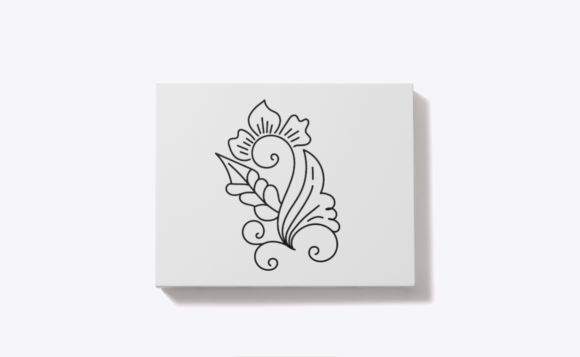
Maximizing Workflow Efficiency with Flower Line Drawing Vector Art
In the current landscape of digital creation, efficiency and adaptability are non-negotiable. Flower line drawing vector art occupies a unique space in the toolkit of modern professionals—it bridges the gap between organic, hand-drawn aesthetics and the technical demands of scalable design. For marketers, entrepreneurs, and designers, these are not just decorative elements; they are functional assets that streamline project execution. This article explores how to integrate this specific art form into your processes, from initial concept to final delivery, ensuring measurable improvements in output quality and operational speed.
Understanding the Functional Value of Vector Line Art
To use an asset effectively, you must understand its core properties. Flower line drawing vector art is characterized by its reliance on strokes and paths rather than filled shapes or complex gradients. This gives it a distinct advantage in several critical workflows:
Scalability without Degradation: In vector format (SVG, AI, EPS), these drawings can be resized from a business card to a billboard without pixelation or loss of sharpness. This eliminates the need to source or generate multiple resolution versions for different use cases, saving hours of repetitive work over the course of a campaign.
Editing Efficiency for Revisions: Because they are constructed of mathematical paths, adjusting a single curve or stroke weight is instantaneous. When a client requests a subtle change to a floral motif, the designer can execute the revision in seconds. This speed directly improves revision cycles and client satisfaction.
File Performance and Load Times: Compared to high-resolution raster images, vector line art results in significantly smaller file sizes. For web developers and digital publishers, this translates directly to faster page load times and a smoother user experience, which are critical factors for both SEO and conversion rates.
Integration Across the Project Lifecycle
The real value of flower line drawing vector art emerges when it is integrated into a structured workflow. It interacts with different tools and platforms in specific ways, providing utility before, during, and after the main production phase.
Before the Project: Preparation and Concept Validation
In the planning stage, vector line art serves as a powerful conceptual tool. Creative directors and small business owners can use a library of floral vectors to rapidly compose mood boards without commissioning custom illustrations upfront. This speeds up the approval loop with stakeholders and reduces wasted creative hours.
Practical Example: An entrepreneur designing packaging for a botanical skincare line can pull several vector floral motifs to test scale, placement, and stroke thickness against the product label dimensions in their layout software. This validation happens in hours, not days.
During the Project: Execution and Friction Reduction
This is where the asset provides the most operational leverage.
UI/UX Design: A flower line drawing SVG can be imported directly into Figma or Sketch. It acts as a UI element—an icon, a background pattern, or a loading state graphic. It is lightweight and easily styled with CSS properties like stroke and fill, adapting to dark mode or brand palette shifts without exporting multiple copies. Developers can later inspect the code and manipulate the paths directly.
Print Production: For screen printers and stationery designers, flower line drawing vector art is invaluable. The clean, defined lines separate cleanly for color separation processes. This ensures consistent reproduction whether you are foil stamping a wedding invitation or silk-screening a t-shirt. The vector format ensures that the press operator has precise data to work with, reducing setup waste.
Digital Content Creation: For a blogger or social media manager, tools like Canva and Adobe Express allow direct import of vector files. A single set of floral line drawings can be recolored and resized to generate a month’s worth of branded post templates. This creates a repeatable system that maintains visual consistency without requiring daily design work.
After the Project: Handoff and Archiving
The deliverable format matters. When handing off assets to a developer or a print house, providing the final graphics as vector line art ensures they have full flexibility. A developer prefers SVG for accessibility and responsive scaling. A print shop prefers AI or EPS for plate making. Using a standard vector format for your floral elements simplifies this final transition and prevents miscommunication.
Practical Implementation and Customization Techniques
Knowing how to manipulate these assets is crucial for maintaining consistency and originality across your work.
Standardizing Stroke Weights for Cohesion
Inconsistent line thickness can make a composition feel disjointed. When collecting flower line drawing vector art from different sources, the first workflow step should be normalizing the stroke weights. In a vector editor like Adobe Illustrator or Inkscape, select all paths and set a uniform base weight. This immediate action creates a cohesive visual language across disparate assets.
- Fine details: 1pt to 1.5pt
- Primary outlines: 2.5pt to 4pt
- Accents: Variable stroke paths using pressure profiles
Building Modular Vector Systems
Instead of using a single, complex floral illustration, consider a modular approach. Break down a flower line drawing into its components: a stem, petals, leaves, and center.
Workflow Benefit: These modules can be reused, rotated, and scaled independently across a campaign.
Example in Practice: A branding agency creating a series of social media templates for a florist can use modular vector parts to generate hundreds of unique compositions—a bouquet, a single stem, a wreath—from a single master library. This guarantees consistency while avoiding visual fatigue.
Adding Depth Without Sacrificing Vector Integrity
Line art does not have to be purely monochrome to retain its process benefits. A common technique is to duplicate the base flower line drawing, offset it slightly, and change its opacity or color for a shadow effect or a neon glow. This maintains the crisp vector integrity while adding a layer of sophistication suitable for modern branding or web design. Because the base remains a simple path, these effects can be automated or templated.
Quality Control and Asset Management for Long-Term Use
For professionals and small business owners who acquire large libraries of vector assets, organization is the primary bottleneck to efficiency. Poor file management negates the speed advantages of using vectors in the first place.
File Naming and Metadata
Generic names like "Flower Vector Final 3.svg" waste time. Implement a strict, searchable naming convention.
- Structure:
category_style_subject_view_variant.svg - Example:
botanical_lineart_rose_sideview_thin.svg
Tagging within your asset manager—such as Adobe Bridge, Eagle, or a cloud-based Digital Asset Management (DAM) system—should include contextual keywords like "wedding," "corporate," "minimalist," or "vintage." This ensures that every team member pulls from an approved set of assets, preventing brand drift.
Auditing Path Integrity
Before integrating a flower line drawing vector art into a master project, run a brief quality check.
- Check for open paths: These can cause issues with automated fills or path operations.
- Optimize anchor points: Remove unnecessary points to reduce file bloat. Use the "Simplify Path" command where appropriate.
- Verify artboard bounds: Ensure the bounding box is properly cropped to avoid unwanted whitespace in automated layout systems.
Educational and Conceptual Applications
For educators and course creators, flower line drawing vector art serves as an excellent teaching tool for technical design fundamentals. Students can trace over vector lines to understand bezier curves, geometry, and digital pen control. The clean base of a line drawing is also a perfect canvas for teaching color theory, gradient application, and pattern generation.
A valuable exercise is to take a single flower line drawing and adapt it into three different contexts: a web icon (minimal, uniform stroke), a packaging label (detailed, with color fills), and an outdoor banner (thick, bold lines with high contrast). This teaches adaptability and reinforces the practical constraints of different media outputs.
Conclusion: Operationalizing an Asset Class
Integrating flower line drawing vector art into your professional workflow is a strategic decision that pays dividends in scalability, consistency, and speed. Whether you are a freelancer building a faster revision cycle, a marketer ensuring brand cohesion across digital channels, or an educator structuring a practical curriculum, these assets provide a reliable foundation. By focusing on the practical mechanics of file management, path customization, and contextual adaptation, you move beyond simply using a graphic—you operationalize an asset class to enhance your overall output and creative control.