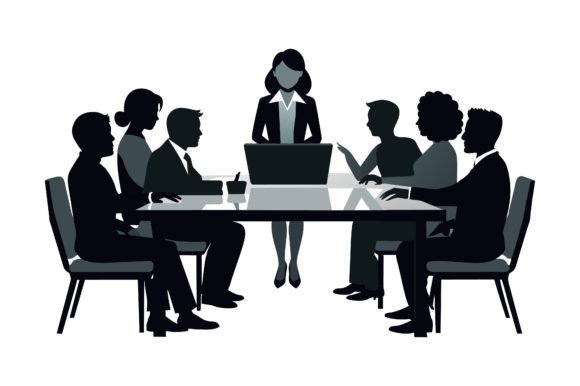
Inside the Meeting Room: How Groups Collaborate and Communicate at the Table
Think about the last time you sat around a table with colleagues, teammates, or fellow students. The scene itself—a group of people gathered in a room, papers or laptops out, voices rising and falling in discussion—is one of the most recognizable images in modern work and education. Yet beneath that familiar surface lies a complex interplay of psychology, communication, and decision-making that many of us never stop to examine. Understanding what happens when a group of people meets at a table can transform your next meeting from a frustrating obligation into a genuinely productive exchange.
Why We Gather: The Deeper Purpose Behind the Meeting Table
At its simplest, a meeting is a scheduled conversation among people who share a common goal. But the meeting table itself carries symbolic weight. It represents equality (everyone has a seat), collaboration (the table is a shared surface), and focus (participants face one another). In practice, the purpose of a meeting typically falls into one of several categories:
- Information sharing – updating the group on progress, changes, or new data.
- Decision-making – choosing among options with input from multiple stakeholders.
- Problem-solving – working through a challenge with collective brainpower.
- Brainstorming and creativity – generating ideas without immediate judgment.
- Alignment and coordination – ensuring everyone is working toward the same priorities.
When groups sit down together, they are doing more than just talking. They are negotiating understanding, building trust, and creating shared meaning. This is why meetings can feel exhausting even when nothing "big" happens—the cognitive load of reading body language, following multiple threads of conversation, and contributing thoughtfully is genuinely demanding.
The Meeting Table as a Tool for Alignment and Decision-Making
One of the most common misconceptions is that a meeting is simply a place to talk. In reality, the table serves as a decision-making engine when used well. The physical arrangement matters. Research on group dynamics shows that seating positions influence participation: people at the head of the table often speak more, while those in the middle of a side have an easier time building on adjacent ideas. Even in a hybrid or remote context, the "table" becomes a virtual space where similar dynamics play out.
A productive meeting follows a structure that respects participants' time and cognitive energy. The most effective gatherings share several characteristics:
- A clear outcome – everyone knows what the meeting should achieve by its end.
- An agenda – topics are listed with time limits, and participants come prepared.
- Facilitated participation – someone ensures quieter voices are heard and dominant voices don't overpower.
- Actionable next steps – decisions are recorded, owners are assigned, and deadlines are set.
Without these elements, a group of people at a meeting table risks becoming a group of people having a conversation with no destination. That's not inherently bad—open dialogue has value—but it's not a meeting in the productive sense.
Common Pitfalls and Misunderstandings in Group Meetings
Even experienced professionals fall into traps that undermine the value of gathering. Recognizing these patterns is the first step to avoiding them.
The "Let's Just Discuss It" Trap
Without a clear question or decision to make, discussions wander. Participants leave unsure of what was agreed upon. Ambiguity is the enemy of productive meetings. Always frame the purpose as a question that needs answering or a decision that needs making.
The Status Update Parade
When every person takes turns reading aloud what they could have written in an email, the room loses energy. Information-sharing meetings are often better handled asynchronously. Use the table for dialogue, not monologue.
The Silent Majority
In many groups, two or three voices dominate while the rest stay quiet. This doesn't mean they agree—it may mean they feel unheard, intimidated, or simply out-talked. Effective facilitators actively invite input from everyone, sometimes by going around the table in order.
Assuming Agreement Means Understanding
Nods around the table can be misleading. People often nod to signal "I hear you," not "I agree with you." Clarifying questions like "Does anyone see this differently?" or "What would we be missing?" can surface hidden objections before they become problems later.
The Modern Evolution of the Meeting Table: Hybrid, Remote, and Asynchronous
The pandemic permanently changed how we think about the group meeting. Today, many tables are actually a mix of physical seats and video squares on a screen. This hybrid meeting model introduces both opportunities and challenges.
In a hybrid environment, the physical table often gives priority to in-person voices. Remote participants—those tiny faces on the screen—can struggle to interject. The best practice is to treat the remote participant as the primary audience: use a good microphone, share slides visually, and explicitly pause to ask for input from those not in the room. Some teams even use a "remote-first" approach where everyone joins from their own device, even if they're in the same building, to level the playing field.
Asynchronous collaboration is another evolution. Instead of gathering at a table at the same time, teams use shared documents, recorded video updates, and collaborative platforms to move work forward without scheduling a live meeting. The key insight is that not every conversation needs to be synchronous. Reserve the meeting table for moments that genuinely benefit from real-time interaction.
Practical Strategies for Better Group Collaboration at the Table
Whether you lead meetings or simply attend them, there are concrete steps you can take to make the time around the table more valuable.
Prepare with Purpose
Before any meeting, ask yourself: What is the one thing that must be accomplished? Share that with participants in advance. Encourage them to come with ideas, not just attendance.
Use Structured Formats
Formats like round‑robin (each person speaks in turn), silent brainstorming (writing ideas before discussing), or dot voting (prioritizing with stickers or marks) can prevent the loudest voice from dictating the outcome. These methods give structure to what might otherwise be chaotic or dominated by a few.
Keep Time Relentlessly
Respect everyone's schedule. Start on time, end on time, and assign a timekeeper if needed. If a topic needs more discussion, schedule a follow-up rather than running over. Short meetings (25 or 50 minutes) with built-in breaks are far more effective than sprawling hour‑plus sessions.
End with Clarity
The last five minutes of any meeting should be dedicated to summarizing decisions, capturing action items, and confirming who will do what by when. Without this, the meeting might as well not have happened.
Rotate Roles
Consider having different people facilitate or take notes each time. This builds meeting skills across the group and prevents any single person from dominating the process.
How Meetings Fit into Modern Life, Work, and Creativity
Meetings are often criticized as time-wasters, but that criticism misses the point. Humans are social learners. We make better decisions when we hear diverse perspectives, and we build stronger teams when we share space—physical or virtual—with one another. The meeting table is where strategy becomes action, where disagreements surface and are resolved, and where creative sparks fly when ideas collide.
In education, group discussion at a table helps students develop critical thinking and communication skills. In business, it aligns teams around shared goals. In creative fields, collaboration around a table—whether a literal conference table or a digital whiteboard—can produce outcomes no individual could reach alone.
The challenge is not that meetings are inherently bad. The challenge is that many meetings are poorly designed. By understanding the dynamics of group interaction, the purpose of gathering, and the practical tools that make collaboration productive, anyone can transform the time spent at a meeting table from a drain into an engine of progress.
Conclusion: The Table Is What You Make of It
A group of people at a meeting table is not automatically productive, creative, or aligned. It is a collection of individuals with different perspectives, priorities, and communication styles. The magic happens when intention meets structure. When you know why you're gathered, how you'll work together, and what you need to walk away with, the table becomes one of the most powerful tools in any organization.
Next time you take your seat—whether in a conference room, a classroom, or a video call—remember that the power of the meeting lies not in the furniture, but in the group's ability to listen, challenge, and build together. With a little awareness and a few good practices, you can make every meeting count.